Beyond Grit: A case for updating how leaders operate their portfolios
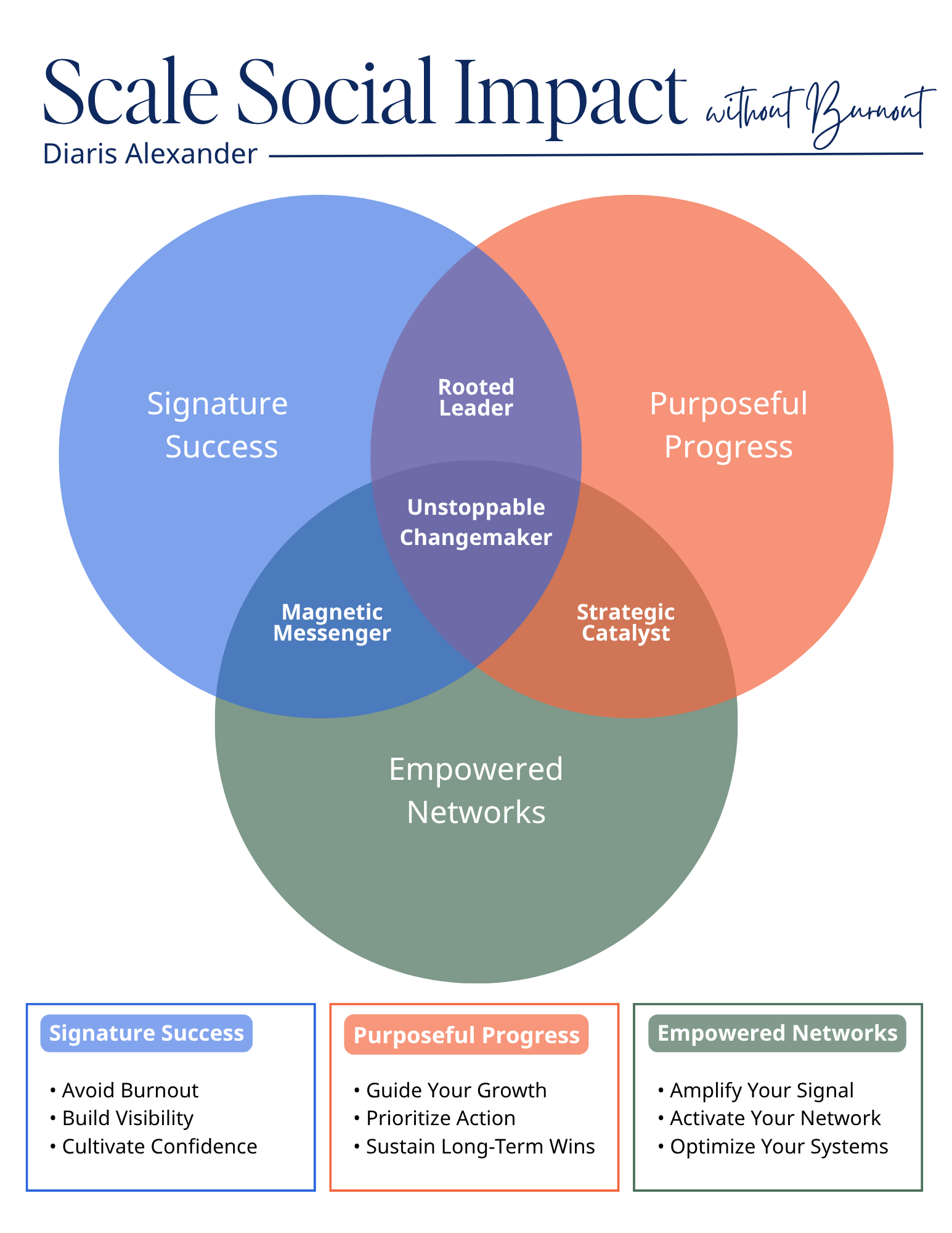
This essay makes the case that high-achieving, multipassionate leaders are not falling short for lack of focus or discipline — they are operating without the infrastructure their ambition deserves. Five arguments for why intentional portfolio integration is the update that's overdue for the modern multihyphenate:
- It's time to recognize the multipassionate visionary on a mission
- The world loses when talented leaders are under-supported
- The prevailing playbook rejects the individuality that makes outliers effective
- Portfolio integration requires a fully-powered Capacity Operating System
- Your next update is now loading
part 1
A dedication to the multipassionate visionary on a mission
Your finger is on the pulse of what’s new and emerging in culture, business, and your industry. You have had the knowledge and foresight to transcend trends and see what’s coming before most people know to look. But connecting those insights and following through at the level they deserve, across everything on your plate, is where things get complicated. Nevertheless, you’ve built projects, teams, ventures, and relationships that are worthy of respect. And yet your current reality doesn’t match your potential or reflect your vision for your work, your portfolio, your life, or your legacy.
You’ve tried the tools: AI assistants to engage and synthesize your thinking, software that transcribe and summarize your meetings, project management systems and CRMs that promised to finally get everyone on the same page. You’ve followed the conversations and news out of big conferences like SXSW, TED, TechCrunch Disrupt, Davos, and BetterUp’s Uplift. Sometimes you get the updates passively through your various feeds, other times actively because you take your work seriously and want to stay close to your fellow pioneers and innovators.
You rarely feel short on ideas. More likely, you feel limited by your capacity to execute.

Photo by Christina @ wocintechchat.com M on Unsplash
At first you wished for more hours in the day. Then, you wished for a clone — of you, of your best collaborator or mentor.
Then you worked your way through the prevailing advice from across the internet and bestseller lists:
Brought on a new hire: personal assistant, virtual assistant (VA), executive assistant, Online Business Manager (OBM), project manager
Freed up time at home: meal delivery, housekeeping, subscriptions with auto-delivery—anything to buy back time
Invested in the brand: strategy sessions, consultants, ongoing chats with experts, AI, and copywriters on the rebrand of all rebrands
Joined the mastermind or conference: curated networking and conversations with people that might actually understand your interests and ambitions
Queued the self development playlist: articles, books, and podcasts; part manifesting and mindset energy, part viral voices likes of Alex Hormozi, Diary of A CEO, Codie Sanchez, Emma Grede,
Took the retreat… or promised yourself you’d unplug
Went back to the basics: life reminded you directly or indirectly, that time is precious, aging is inevitable, and health is not guaranteed
After all, everyone is just figuring it out as they go, right?
You’ve had some major wins. You’ve learned to roll with the valleys. You survived a global pandemic! But at the end of the day… you’re exhausted.
You know burnout is real. Experts share that it can take 3+ years to recover. But you don’t have the luxury of that kind of time.
You know you ultimately learn best through action— and keeping things moving has helped momentum be your medicine.
A relaxing vacation won’t fix it. Neither will an exciting new venture, or the “perfect hire.” Those options have value, but they were not designed to address the root of the problem. You don’t struggle because you lack vision, focus, drive, or discipline. Your track record makes that clear. The problem is complex and deeper than surface fixes, quick transactions, or solo insights.
And despite what your inner critic might be telling you… that’s not a character flaw or limitation.
The systems, structures, and support around you were never built to hold the full scope of who you are. That misalignment is a design problem that makes wins feel inconsistent and unstainable. Fortunately, design problems have design solutions — what was designed without you in mind can be reimagined with you at the center.
Part 2
The cost isn’t just personal: the world loses when leaders like you go under-supported
The stakes are real. The world needs leaders like you to thrive and own an expanded capacity to drive impact — with your character, and your signature mix of talent, vision, and community fully integrated and expressed.
Some people live the majority of their life following a predetermined path for a specific career: doctor, educator, lawyer, financial advisor, corporate marketer. You’re here because you're different. You’ve felt pulled in multiple directions and had the courage to explore them. You see entrepreneurship, creativity, and building a portfolio as a way to honor your values:
To build wealth that creates ease and comfort for loved ones today and for generations to come
To invest in communities and causes you see as worth building, funding or fighting for
To follow your sense of purpose and creative instincts — a version you that would feel constrained by a traditional title and salary
You’ve built enough to know that “more” isn’t a real answer. But there’s still a gap between knowing that and getting what you desire.
At the end of the day, you feel limited by bandwidth and pulled in different directions. Compartmentalization helps on some days, but it’s hard to tell if it’s worth it on a soul level.
You get to the point where you’re like fuck it… there’s got to be a better way. And you’re right. But you’ve been around long enough to know that a shiny, cookie-cutter, guru-approved roadmap was never going to be perfectly customized for someone like you.
The economy, technology, and world is changing rapidly. More people are joining the throes of freelancing and entrepreneurship… something you’ve started before it became popular or necessary.
Society has always acknowledged that certain kinds of minds produce outsized value.
An ecosystem recognizes leaders with outsized impact, talent, and/or influence.
The MacArthur “Genius” grant, Forbes Lists, Inc 5000 all exist to recognize these talented minds, leaders, and businesses. Venture capital and accelerators like Y Combinator invest in founders building innovative products because they understand the value of what’s lost when exceptional leaders operate below their potential.
When leaders are under-supported, under-integrated, or quietly suffering burnout, the depth of their talent goes unrealized. The cost isn’t just personal to those leaders, or insulated to their businesses. The inspiring stories that could have changed the conversation never get published, launched, or funded. We all suffer from that missed potential. The graveyard of great ideas was paved with great intentions, but poor execution.
Here’s what this often looks like in practice:
A leader with a for-profit business, a young nonprofit, a budding personal brand, and real estate holdings: They may spend 9 a.m. to 7 p.m. on the main business— answering the same set of questions from collaborators, prospects, and clients daily. From 8 p.m. to 11 p.m.,they work on the nonprofit and catching up on emails. They may have an annual birthday dinner or trip with their circle where people are supportive, but it stays surface-level because the reality is too much to discuss.
Some moments are exhilarating. But as soon as one milestone is achieved, it’s on to the next one. It can feel both exhausting and isolating in many ways.
The exhaustion is just one consequence. There’s a version of this that becomes genuinely expensive beyond the mental and emotional tax:
An investor passes because the operation feels too dependent on you, personally
A talented senior hire declines because they can’t visualize how and where their value would land within your current system
A potential partnership stalls because there’s no clear picture of mutually beneficial outcomes or an environment for “iron to sharpen iron”
What feels like a personal frustration is actually an alert from your system.
Note
The friction is not in you — it exists in the gap between your values, your assets, your goals, and the infrastructure holding it all together.
Part 3
The systems you were handed were built for the masses, but your power is in your vision and individuality
The systems that you were handed, were built for someone else… and for a different era.
The prevailing productivity content, business frameworks, business coach and leadership device— almost all of it was built for a specific type of operator: single focus (function or industry), linear career, one company, or goal at a time.
But you wear all the hats. Sometimes all at once. And even when you choose not to, you are still drawn to maintain quite the hat collection
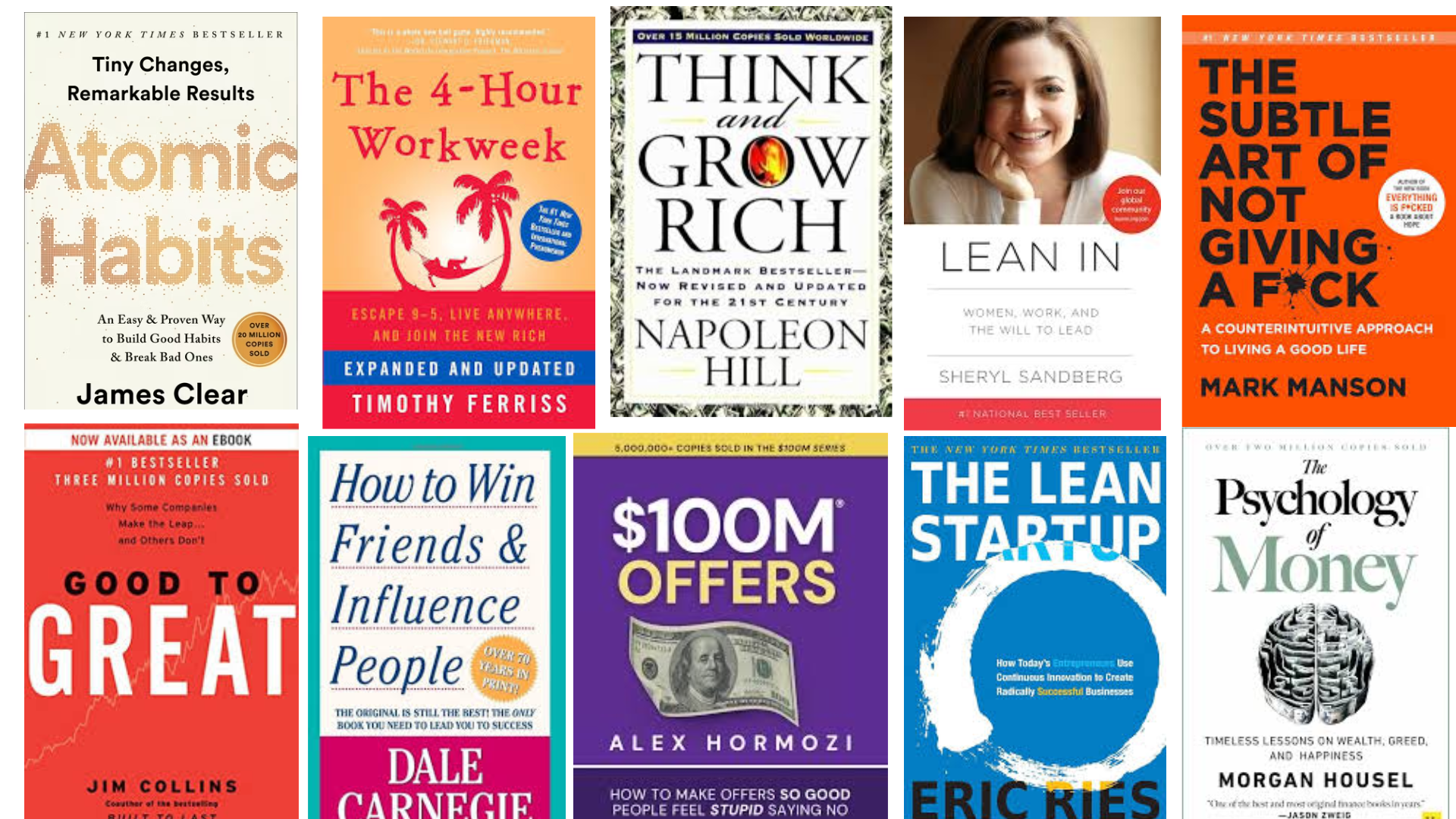
There are genuine gems of wisdom in the top books for entrepreneurs. They may provide “feel-good procrastination” with inspiration, productivity hacks, reflection questions, and mindset tips. But no amount of discipline or grit applied to the wrong architecture produces the right result.
You love to get things done. Because you can. Because you have a track record. Because it builds momentum and has brought you unique opportunities over time. The popular self development frameworks weren’t designed for the full scope of what you’re building or managing.
It’s fundamentally a mismatch in design — they’re meant to be consumed and digested by the masses… and were designed for a different era.
You’ve been ahead of the curve, and these tools don’t account for the reality you’re currently navigating. The operating environment has changed: AI, the attention economy, portfolio careers, the collapse of single-employer life, the loneliness epidemic. You and your projects are constantly evolving, pivoting, and changing speeds.
The world these books were written for… just doesn’t exist anymore.
What you need now is not a new tool, hire, or framework designed for someone else living in an alternate universe. What you need is the one thing none of those came with: a modern operating system built around you.
Part 4
Integration requires a fully-powered Capacity Operating System
I’d like to invite you to reimagine how a personalized, supportive ecosystem might match who you are in this season of your life—and the current realities of tech, business, and the world at large.
The missing key, as I see it, is a Capacity Operating System (Capacity OS) — one of four key layers in how you exist in the world as a multipassionate leader.
If you’re like me, you are already tethered to a smartphone daily. It is your gateway to your world—a reflection of your values, connections, interests, and schedule. And even the most frugal leader among us isn’t currently using a ten-year-old smartphone (Macbook… maybe.) This likely isn’t because we’re wasteful or stubborn, but because the operating environment changed: the apps, demands, integration, storage all outgrew what the old hardware and software could support. Perhaps the last device never failed. It simply became a mismatch for the primary use case in today’s world.
Your personal operating system works the same way. What got you here was built for an earlier version of what you were managing in terms of work, aspirations, and lifestyle. The question isn’t whether it worked then. The question is whether it was designed to meet the complexity of what you’re carrying now.
Capacity OS Layers
Here’s an outline of how I conceptualize the 4 layers interacting with a leader’s capacity: a metaphor for hardware (you), applications (your portfolio), the Capacity OS (the architecture), and the network (your world).
-
Your body, nervous system, values, cognitive bandwidth. The foundation of human capacity that everything runs on. When the hardware degrades, the whole system throttles to protect you from catastrophic failure.
-
Every business, role, board seat, creative project, and commitment is an app. Each has real utility. The problem is rarely about the apps you own. The problem is running them simultaneously without a functioning OS beneath.
-
The integration logic, resource allocation, and strategic design that determines how your time, energy, and assets flow across all projects, assets, and commitments. This is the layer that touches everything, yet is rarely intentionally engaged for optimal results.
-
The relationships, communities, ventures, and ecosystems you’ve connected to through events of life and work. The network leverages the OS to showcase what is accessible — and what you can transmit.
The core insight: You can have powerful hardware and great apps, but if the OS isn't configured correctly, nothing runs efficiently.
Part 5
Your next update is now loading...
Before anything can be updated, it needs to be seen.
Most leaders building across multiple domains have never had a comprehensive view of their full asset landscape — the complete picture of what they're working with, what's draining capacity, and what's sitting unleveraged in storage. Compartmentalization is a common coping strategy, but it masks the real problem. The containers of your life and work were never built to hold the full scope of what you're managing.
So to enact sustainable change, I recommend starting with an audit.
An audit gives you space to unload and inspect what’s taking up your bandwidth. It creates a clear record—a snapshot of where you are right now (which is likely a key inflection point). It lets you bring what feels “messy,” and walk away with a new, actionable level of clarity and insight. The right audit doesn’t just give you a grade or to-do list. It provides a mirror and a portal — to what’s possible when you give yourself more credit for the full scope of what you’ve built, and honest accounting of what it’s costing you to maintain “business as usual” during unusual times.
I am consistently inspired by my circle of creatives, serial entrepreneurs, philanthropists, multihyphenates — and I notice the same two impulses when clients feel stuck. Either they need more hands: someone to finish the backlog, get the deck done, manage the next launch. Or they need more space: room to breathe, reset, and be strategic about execution.
Both of those impulses are real, yet neither represents the real, full issue.
I understand the drive to keep busy. The illusion of productivity can feel safe and empowering. But it also keeps visionaries operating in a reactive mode— robbing capable leaders of real, earned leverage.
These instincts keep talented people in a perpetual state of catch-up, managing the symptoms of an under-integrated system, while the system continues to generate new issues.
Ultimately, the value of your portfolio is related to the value of the problems you’re solving— and you’ll need to also be proactive to maintain it. Leaders cannot afford to spend hours managing symptoms and putting out predictable fires. The opportunity cost is too high. Instead, you need to invest in building the architecture that compounds your effort, expands your most valuable relationships, sustains your performance, and produces outsized portfolio outcomes.
I know this pattern well from both sides of the table.

Having led teams of 2–80 people, I've watched what happens when strong strategy meets under-resourced execution — and what happens when execution gets prioritized over the architecture that makes it sustainable. The leaders who scale without burning out, and without burning the people around them, are almost always the ones who invested earlier in procuring the full picture: a map of their capacity, integration gaps, and unique compounding potential.
Time has a way of sharpening our lens and perspective. Aging, and navigating medical challenges — my own and those of people I love — has made it undeniable that time, health, and innate gifts do not come with lifetime quality guarantees. We have the present and our ability to adapt at the level of our self- (and social-) awareness. That's what I bring to my work: honesty about what I see, clarity about what I'm equipped to do, and genuine commitment to starting with what we have and where we are… and ultimately, building something that lasts.
While not every engagement is the right fit, an audit is partly how we find that out. My goal is to be a thought partner who can provide well-informed recommendations, integrate new insights, and mobilize resources to execute your vision.
The leaders I work best with possess a set of orientations that I call The Multiplier Profile.
The multiplier profile
Visionary with Stakes
Builds because something needs to exist in the world and is well-positioned to bring it forward.Community Developer
Thinks about who team members are becoming, not just what they're delivering. Holds their network with the same intentionality and regard brought to closest collaborations.Invested in the How
Recognizes that the path matters — ethically, relationally, operationally — because how one builds influences the outcomes.Anchored Expansion
Rooted with range. Self-knowledge runs deep enough to move across multiple domains and evolve without losing the thread of values, identity, and key strengths.Curious About Leverage
Developing a sharper relationship with time and attention because the power of “yes” shapes what follows.Positioned to Scale
Owns real assets — skills, relationships, reputation, ventures, brands — and is ready for them to work together instead of competing for the same bandwidth and resources.
The leaders who achieve their best work — people genuinely driven by impact, not just engagement — are selective about how they invest their resources and steward their own capacity.
My client work typically moves in three stages — each building on the one before:
“A well-architected system doesn’t just perform better — it transmits further. Your ideas, your influence, your legacy.
All of it gets clearer when the OS is running right.”
If you're ready to expand your perspective on the value of the assets at your disposal — this is where we start.
Continue Reading